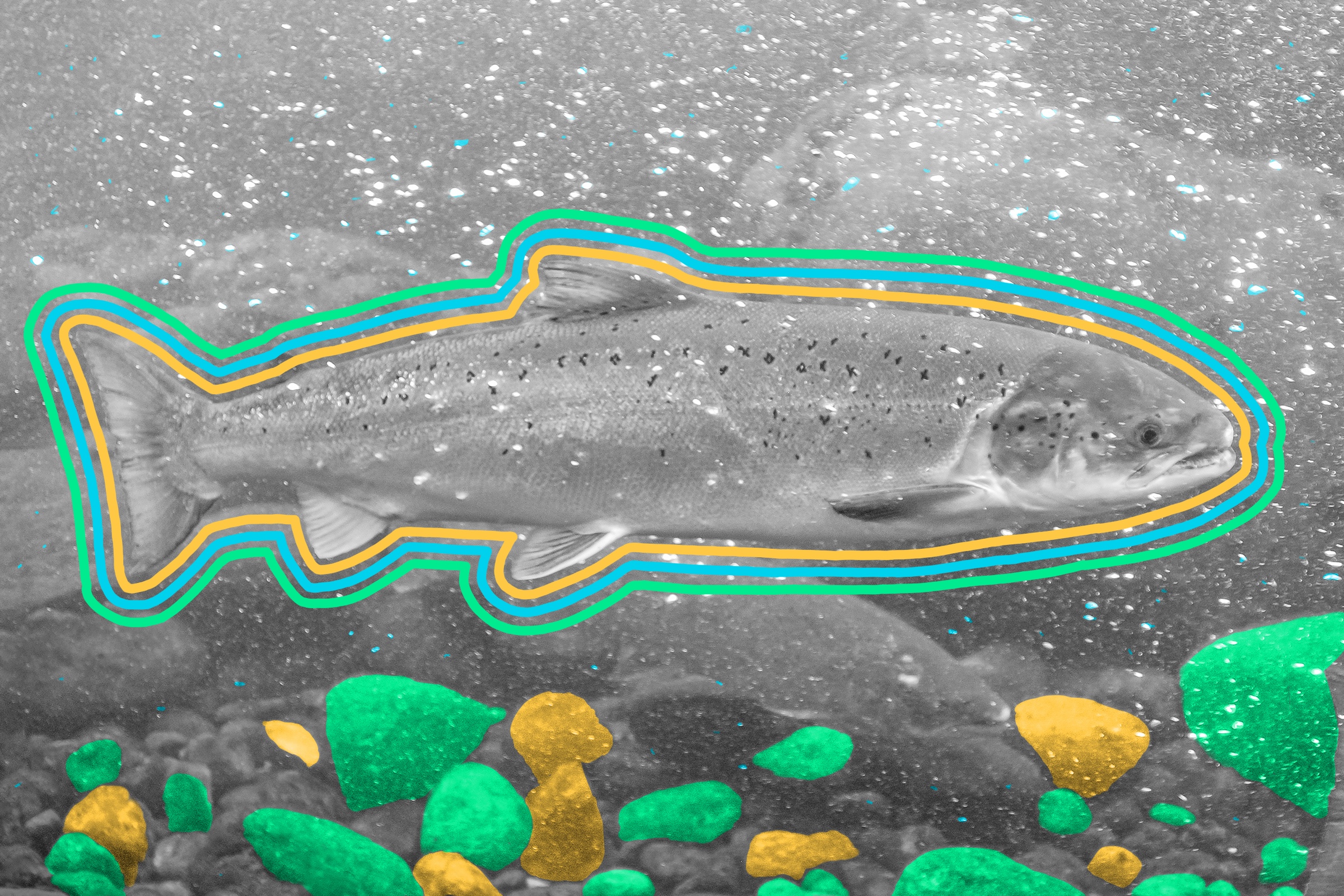
| Before humans roamed the Americas in great numbers, the continent was home to some of the Earth's largest animals: the massive American mastodons of the Yukon, the giant ground sloths of South America, and human-sized armadillo-related creatures called glyptodons. But even before these impressive specimens, another beast of tremendous proportions plied the waters of the Pacific Northwest. Its scientific name is Oncorhynchus rastrosus, but it's known as the "sabertooth salmon." The sabertooth salmon looked similar to the pink-hued fish found at most supermarkets today, except for one major thing — it was up to 8 feet long. This giant salmon's natural range included what's now California, Oregon, and Washington. Much like modern salmon, it primarily lived in the Pacific Ocean while spawning in bodies of fresh water along the coasts. The fish gets its gruesome name from its teeth, which — unlike those of the similarly named saber-toothed tiger — stuck out like spikes on its snout. Scientists believe these teeth were primarily used in mating displays, fighting, and building redds (aka nesting sites). While this massive salmon went extinct about 5 million years ago, long before humans arrived on the continent, the surviving members of its genus, such as the Chinook and coho salmon, are still some of the most important and beloved species of the Pacific Northwest. | 





0 komentar:
Posting Komentar